The advanced air mobility (AAM) sector is entering a new phase of execution, with one of the leading electric air taxi developers now moving from technology validation to high-volume manufacturing. The company has announced a major expansion of its U.S. production capacity, with a clear target: to build four electric air taxis per month by 2027.
This production ramp-up reflects growing confidence in the commercial viability of urban air mobility and signals that the era of zero-emission, on-demand air travel is moving from concept to reality. For C-suite leaders in aviation, mobility, infrastructure, and sustainability, this shift represents a strategic inflection point in how cities will move people and goods in the coming decade.
A New Phase: From Prototypes to Volume Production
The company’s growth strategy is built on real industry momentum. It already operates manufacturing facilities in two U.S. states, both of which will support the production ramp-up. Recent milestones show that this is not just a plan on paper, but an active, capital-intensive build-out:
- An expanded factory has been completed in California, designed for non-stop, round-the-clock manufacturing.
- In another state, the company has begun producing key components such as propeller blades, ahead of larger-scale manufacturing activities in the region.
These investments are being made to support a clear production target: four aircraft per month by 2027. This level of output positions the company as one of the few in the world capable of building aircraft at meaningful volume while maintaining the quality and safety standards required for commercial passenger operations.
Strong Market Demand and Strategic Partnerships
The decision to scale manufacturing is underpinned by strong commercial and government interest. The company has secured over $1 billion in potential aircraft and service sales, reflecting confidence from both public and private sector customers.
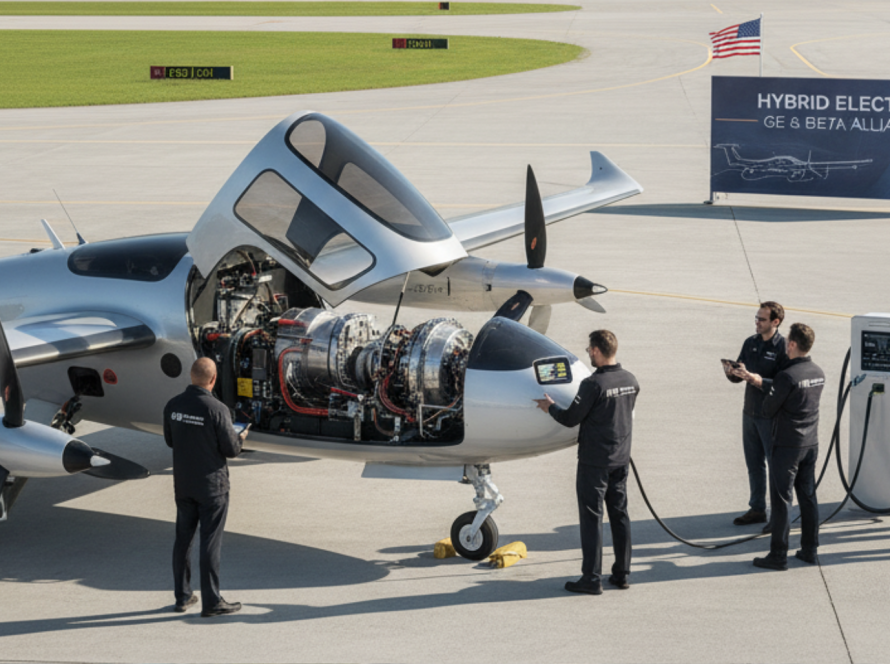
A key enabler of this growth is a long-term strategic partnership with a major global automaker, known for its expertise in high-volume, precision manufacturing. In 2025, the automaker made a significant strategic investment and is now finalizing a manufacturing alliance designed to support the production ramp-up.
This collaboration brings decades of automotive manufacturing know-how into aviation, helping to:
- Optimize production lines for efficiency and scalability.
- Implement robust quality and safety systems.
- Accelerate the transition from low-volume prototyping to high-volume, repeatable manufacturing.
Together, the partners share a vision: making electric air taxis a reliable, trusted part of future urban transportation networks.
Certification and Flight Readiness
Parallel to manufacturing expansion, the company is making steady progress toward regulatory certification. It has begun power-on testing of the first aircraft built to meet the final FAA Type Inspection Authorization (TIA) standards-the last and most critical stage of type certification, during which agency test pilots will fly the aircraft themselves.
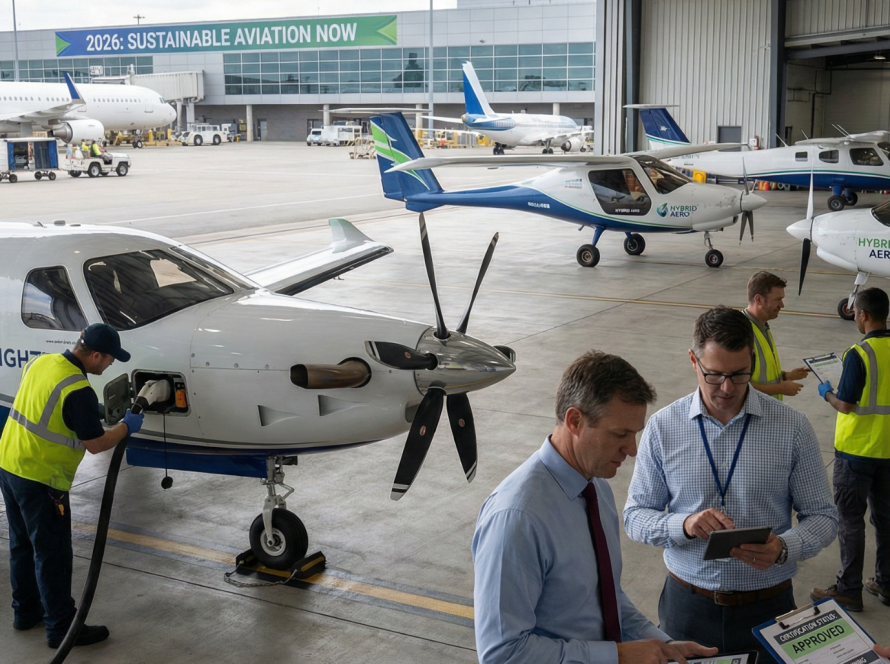
Additional FAA-conforming aircraft required for TIA are already under production, ensuring that the certification timeline remains on track. This progress is critical for launching commercial passenger services in the target timeframe.
Flight activity in 2025 also accelerated significantly:
- The company completed more than 850 flights across its fleet, logging over 50,000 miles-a 2.6× increase from the previous year.
- Aircraft flew in three major markets: the United States, the United Arab Emirates, and Japan, including high-profile demonstrations at major global events.
These flights are not just for show; they are essential for:
- Collecting real-world performance data.
- Validating design decisions and operational procedures.
- Proving reliability and safety to regulators, customers, and the public.
The data from these campaigns is now feeding directly into final certification activities and the development of operating and maintenance manuals.
Proving Real-World Operations
In 2025, the company demonstrated its aircraft in a range of real-world scenarios, reinforcing the practicality of electric air taxis for urban and regional mobility:
- At a major global exposition, the aircraft completed dozens of piloted flights, showcasing its integration into a busy public event environment.
- In the UAE, the company conducted environmental and operational testing, including the first piloted point-to-point air taxi flight from a suburban area to a major international airport.
- In the U.S., the company completed multiple point-to-point flights between public airports, demonstrating the feasibility of inter-airport and regional routes.
These operations show that electric air taxis can:
- Integrate with existing airport infrastructure.
- Serve high-demand corridors such as city centers, business districts, and transport hubs.
- Provide faster, quieter, and cleaner alternatives to ground-based ride-hailing and private vehicles.
Cleaner Growth: Scaling While Cutting Emissions
The company views urban air mobility as a strong complement to existing transportation, offering faster, quieter, and cleaner travel. Its fully electric air taxi significantly reduces emissions per passenger compared to conventional vehicles.
Despite a 29% increase in energy use due to manufacturing growth, the company reduced its overall emissions by 44% in the previous year by relying on renewable electricity:
- 84% of facility power came from renewable sources, including on-site solar.
- Employee EV charging replaced thousands of gallons of gasoline, further reducing the company’s carbon footprint.
This demonstrates that it is possible to scale advanced manufacturing while simultaneously lowering environmental impact-a model that will be increasingly important for investors, regulators, and customers.
The Advanced Air Mobility Market Opportunity
The company’s expansion is happening within a booming global Advanced Air Mobility (AAM) market. Industry forecasts highlight the scale of the opportunity:
- Global AAM revenue is expected to reach around $1.76 billion by 2025, with some estimates significantly higher.
- By 2035, the market could grow to $90 billion, expanding at a compound annual growth rate of more than 20%.
- The Urban Air Mobility (UAM) segment alone could grow from about $6.6 billion in 2025 to $126 billion by 2035.
Key drivers of this growth include:
- Rising urban congestion and pollution in major cities.
- Strong government support for eVTOL integration and infrastructure development.
- Growing partnerships between technology firms, automakers, and mobility platforms.
Within this landscape, the company’s own market is projected to grow from about $1.4 billion in 2024 to $13.8 billion by 2033, at a robust compound annual growth rate of nearly 29%. This trajectory reflects increasing confidence that clean, electric air taxis can become a mainstream solution for passenger travel, logistics, and emergency response.
What C-Suite Leaders Should Do Next
For executives in aviation, mobility, infrastructure, and related sectors, the acceleration of electric air taxis demands a clear, forward-looking strategy:
- Assess the competitive and regulatory landscape
Monitor certification progress, production timelines, and regulatory developments in key markets to understand when and where commercial services are likely to launch. - Evaluate integration into mobility ecosystems
Consider how electric air taxis can complement existing ride-hailing, public transit, and airport connectivity, creating seamless, multi-modal journeys for customers. - Engage on infrastructure and vertiport planning
Work with city authorities and infrastructure developers to plan vertiports, air traffic management, and ground-air integration in high-demand corridors. - Focus on safety, reliability, and customer experience
Prioritize robust safety systems, clear operational procedures, and intuitive user interfaces to build trust and drive adoption. - Align with sustainability and ESG goals
Position electric air taxis as part of a broader decarbonisation strategy, reducing emissions per passenger and supporting net-zero commitments.
Looking Ahead
The push to produce four electric air taxis per month by 2027 is more than a manufacturing target-it is a statement of intent. It shows that advanced air mobility is moving from the experimental phase into a new era of volume production, certification, and commercial readiness.
For C-suite leaders, this is a clear signal: the future of urban and regional mobility is being reshaped from the ground up. Those who act now to understand, adapt to, and shape this transformation will be best positioned to lead in the next era of transportation.
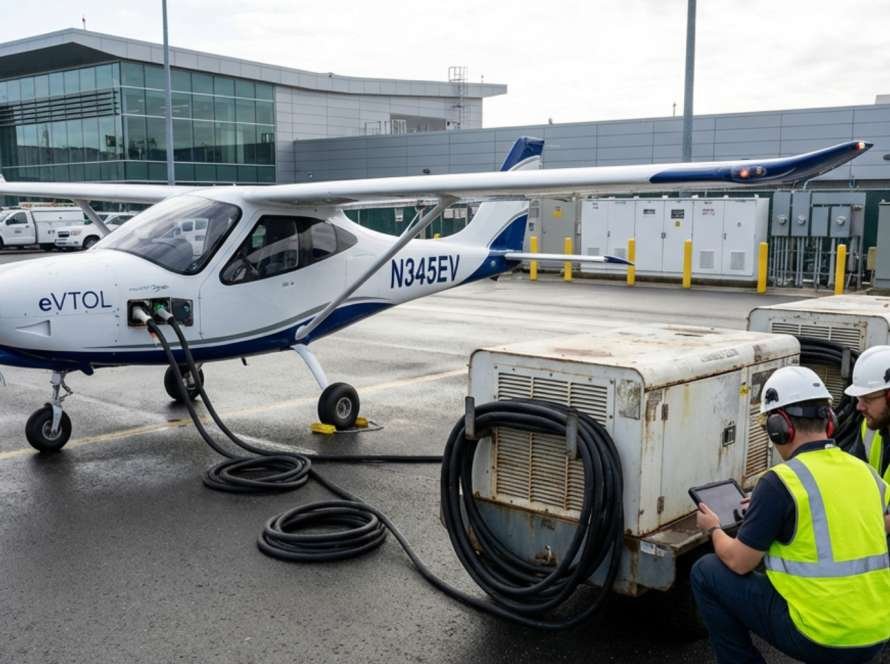
Charging infrastructure becoming a critical bottleneck for eVTOL scale-up read more