The global electric aircraft market is entering a decisive growth phase as sustainability mandates, urban mobility demands, and propulsion breakthroughs converge. Valued at USD 13.83 billion in 2025, the market is projected to reach USD 81.35 billion by 2035, expanding at a robust CAGR of 19.39% between 2026 and 2035.
For aviation leaders, infrastructure investors, and policymakers, electric aviation is no longer a long-term concept-it is rapidly becoming a commercial, regulatory, and competitive reality.
Why Electric Aviation Is Gaining Strategic Momentum
Electric aircraft are emerging as a credible alternative to fossil-fuel-powered aviation, particularly across short-haul, regional, and urban routes. The shift is being driven by five structural forces:
- Net-zero commitments and emissions regulation
- Rapid advances in battery energy density and electric motors
- Lower operating and maintenance costs
- Urban Air Mobility (UAM) expansion
- Strong public and private investment pipelines
Executives across aerospace, logistics, defence, and infrastructure are increasingly viewing electric aircraft as a cost-reduction and decarbonisation lever, not just an innovation experiment.
Market Structure: Where Value Is Concentrating
By Aircraft Type
- Fixed-wing electric aircraft are gaining traction for regional passenger and cargo operations.
- Rotary-wing and eVTOL platforms are driving UAM and last-mile connectivity.
- Hybrid-wing designs are emerging as a transition solution, balancing range and flexibility.
By System
- Batteries accounted for the largest share (32% in 2025), reflecting the central role of energy storage.
- Aerostructures (27%) are benefiting from lightweight composites and additive manufacturing.
- Electric motors and avionics are seeing rapid innovation tied to efficiency and redundancy.
By Technology
- VTOL and eVTOL platforms dominate future urban mobility strategies.
- CTOL and STOL aircraft remain critical for regional and remote connectivity.
Commercial Applications Accelerating Adoption
- Urban Air Mobility (UAM): Air taxis, intercity shuttles, and emergency response
- Commercial Aviation: Short-haul regional flights with lower operating economics
- Cargo and Logistics: Middle-mile freight and drone-based delivery
- Military and Defence: Surveillance UAVs and hybrid-electric tactical platforms
Pre-orders for eVTOL aircraft alone now exceed 6,000 units globally, underscoring rising confidence from airlines, logistics firms, and governments.
Regional Dynamics: Where Growth Is Strongest
- North America leads the market (35% share in 2025), driven by advanced R&D ecosystems, certification progress, and charging infrastructure.
- Europe follows closely (28%), supported by stringent emissions policy and public funding such as the EU’s Clean Aviation initiative.
- Asia-Pacific is the fastest-growing region, fuel by urbanisation, regional connectivity gaps, and government-backed sustainable aviation programs.
- LAMEA is emerging through pilot projects in UAM and cargo, though infrastructure remains a key constraint.
Key Constraints and Strategic Risks
Despite momentum, executive decision-makers must navigate:
- Battery energy density limitations, which still constrain range and payload
- Infrastructure gaps, especially high-capacity charging networks
- High upfront capital requirements
- Complex certification and safety validation processes
Hybrid-electric aircraft are increasingly viewed as a pragmatic bridge while full-electric platforms mature.
Competitive Landscape: Who Is Shaping the Market
Market leadership is split between:
- Established aerospace players such as Airbus, Boeing, and Siemens, leveraging scale, certification expertise, and capital
- New-generation innovators including Joby Aviation, Lilium, Eviation, and Wright Electric, focused on eVTOLs and regional electric aircraft
Recent milestones-such as Eviation’s Alice flight tests, Pipistrel’s EASA certification, and Airbus’ CityAirbus NextGen prototype-signal accelerating commercialization.
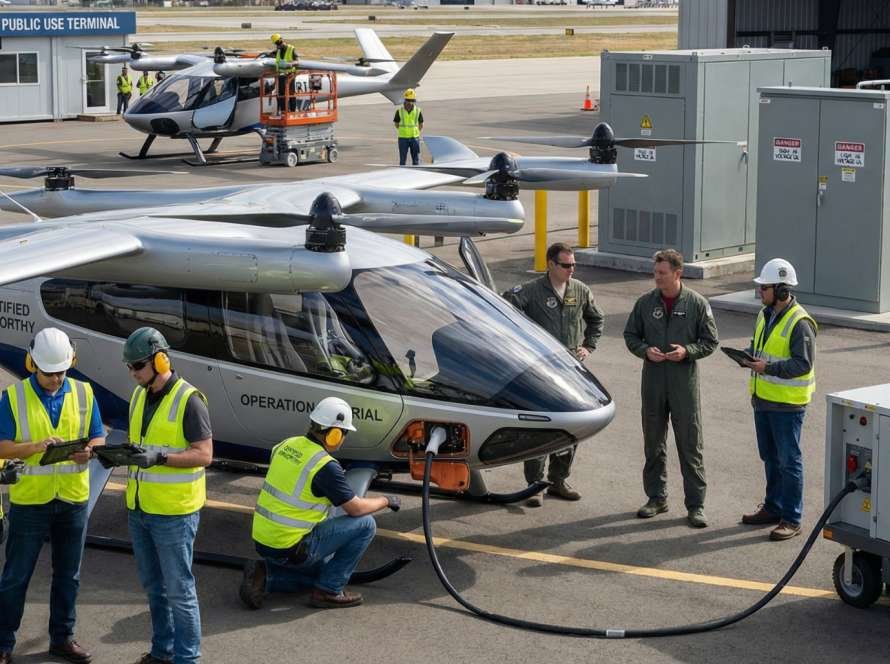
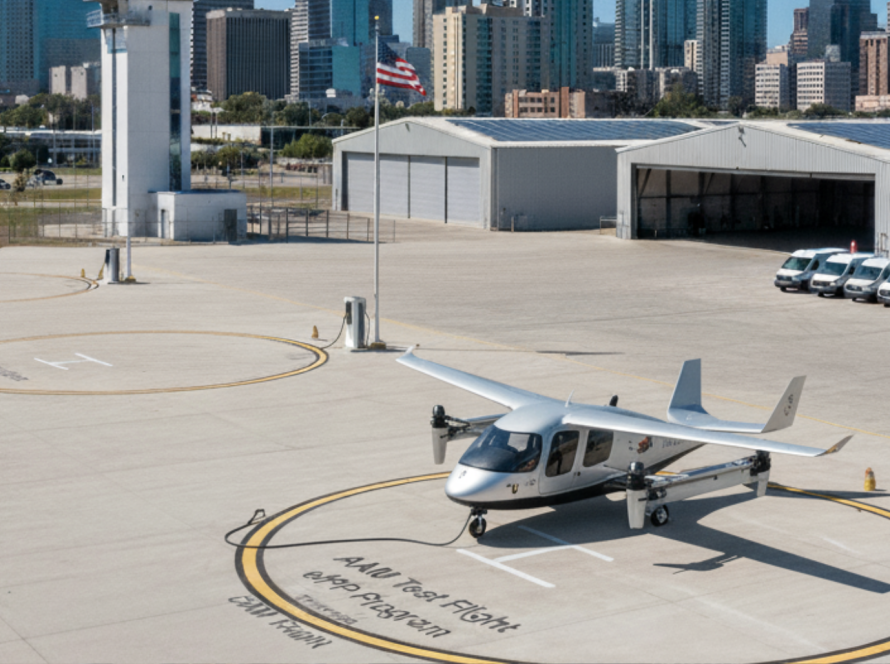
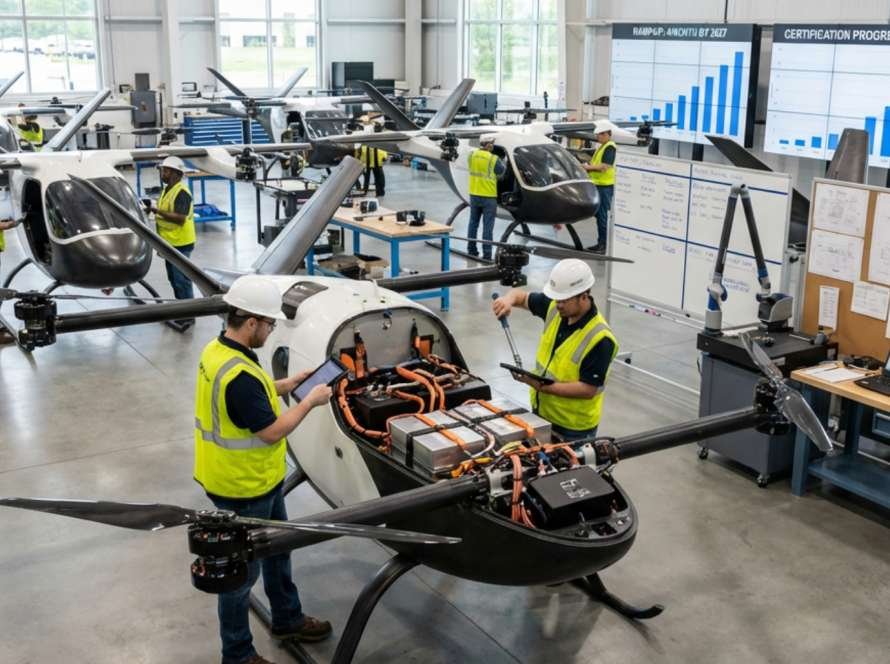
How Electric Aircraft Are Entering Real-World Operations
Executive Outlook
Electric aviation is transitioning from technological promise to economic inevitability. As battery performance improves, certification frameworks mature, and infrastructure scales, electric aircraft will redefine regional travel, urban mobility, and aviation cost structures.For C-suite leaders, the strategic question is no longer if electric aircraft will reshape aviation-but where to invest, partner, and deploy first to capture long-term value.