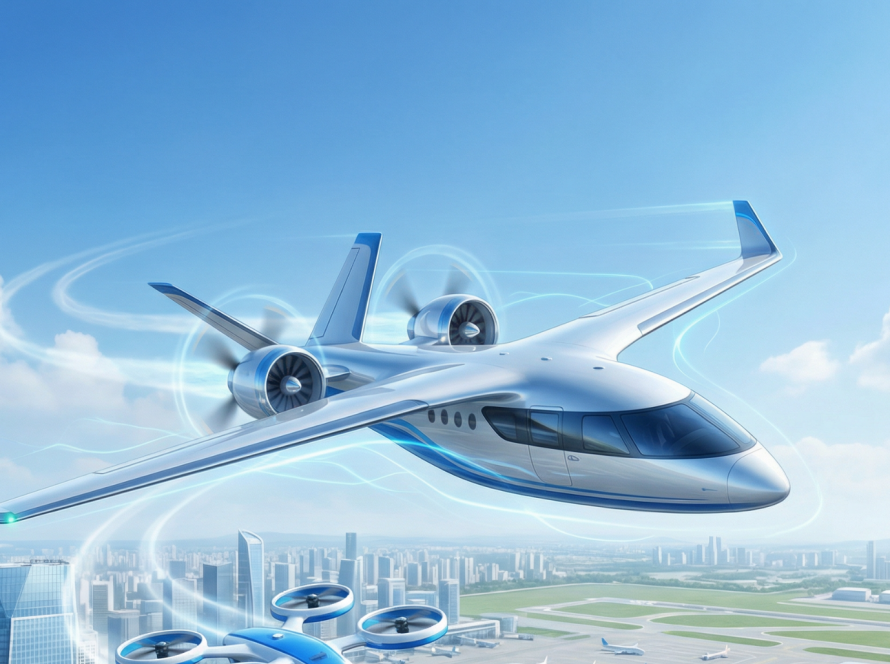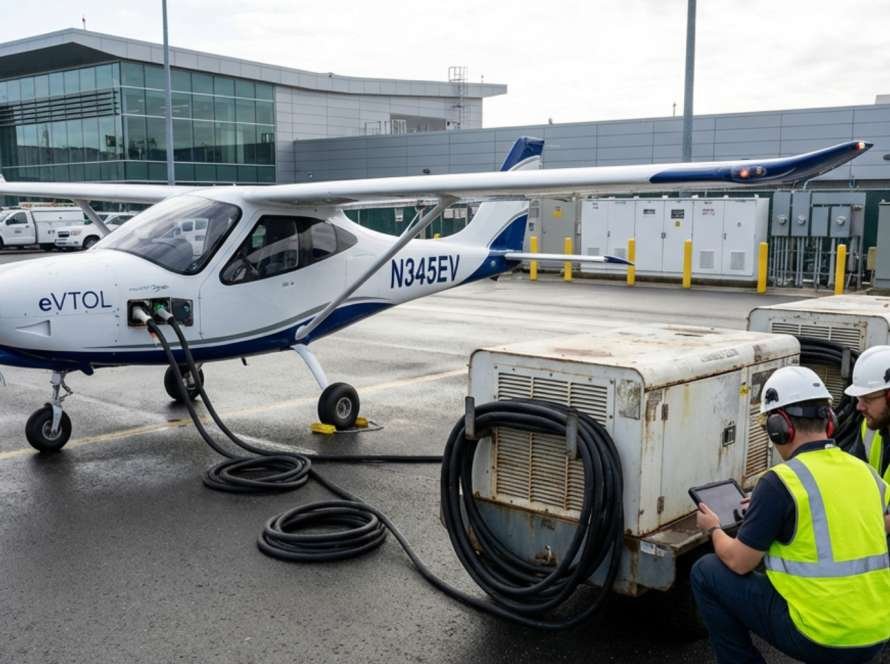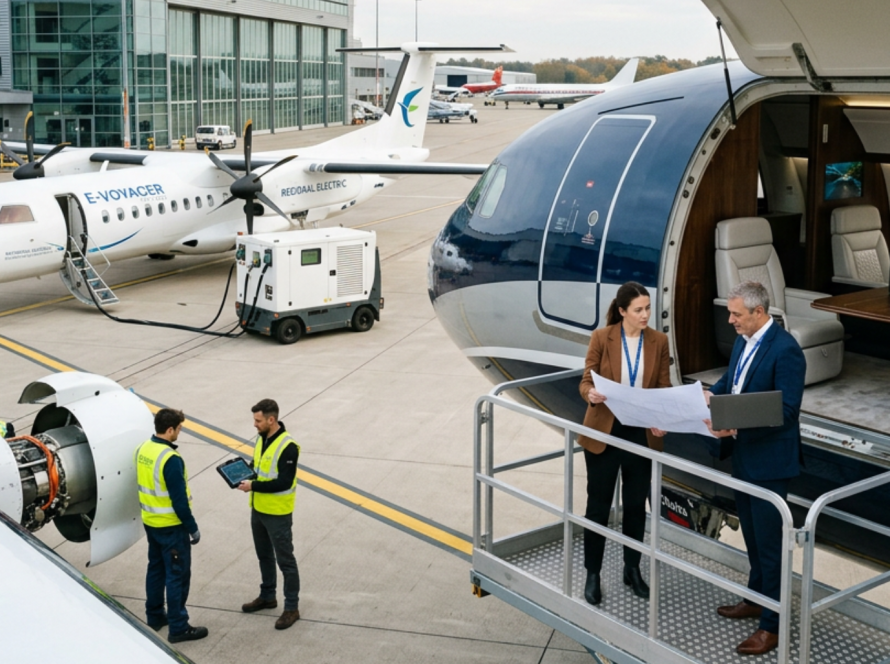
April 2026 marks a defining transition point for the Advanced Air Mobility (AAM) industry. What was once viewed as experimental is now entering early-stage deployment, with tangible progress across airspace integration, certification, sustainability, and real-world applications.
The strategic focus has shifted. The question is no longer “Can AAM work?” – it is now “How fast can it scale?”
For C-level executives, AAM is emerging as a multi-layered infrastructure opportunity spanning aviation, AI, urban mobility, and defence.
AI-Driven Airspace Becomes the Core Enabler
One of the most critical bottlenecks in AAM – scalable airspace management – is now being addressed through artificial intelligence.
Joby Aviation and Air Space Intelligence have partnered to deploy AI-powered air traffic systems using advanced 4D modelling.
Key implications:
- Transition toward software-defined air traffic management
- Integration with next-generation regulatory frameworks
- Enablement of autonomous eVTOL operations at scale
Airspace intelligence is becoming as important as the aircraft itself.
Sustainability Shifts to Materials Innovation
Sustainability in AAM is moving beyond propulsion into materials engineering.
Sora Aviation is advancing the use of recycled carbon fibre (rCF) to develop lighter and more sustainable aircraft structures.
Strategic impact:
- Reduced lifecycle emissions
- Lower manufacturing costs
- Improved structural efficiency
Material innovation is emerging as a competitive differentiator in next-generation aircraft design.
Defense Applications Expand AAM’s Strategic Role
AAM technologies are increasingly extending into defense and strategic mobility.
REGENT has successfully tested its Seaglider drone, a wing-in-ground (WIG) platform designed for maritime defense.
Key advantages:
- High-speed, low-altitude operation
- Reduced radar visibility
- Enhanced fuel efficiency
This marks a shift where AAM is no longer limited to urban transport but is becoming part of national security infrastructure, particularly in geopolitically sensitive regions.
eVTOL Certification Milestones Accelerate Commercialization
Regulatory validation remains a critical barrier – and it is now being actively addressed.
Vertical Aerospace has completed a two-way piloted transition flight, demonstrating seamless movement between vertical lift and wingborne cruise.
Why this matters:
- Validates real-world eVTOL functionality
- Accelerates certification timelines
- Strengthens commercial viability of air taxi networks
This milestone brings AAM significantly closer to urban deployment in major global cities.
Healthcare Emerges as a High-Impact Use Case
AAM is rapidly expanding into healthcare logistics and emergency response.
Sarla Aviation, Aster DM Healthcare, and Aeromed International are collaborating to develop eVTOL-based medical transport systems.
Focus areas include:
- Critical care-enabled air ambulances
- Hospital-to-hospital transfer corridors
- Emergency response optimization
This represents one of the most immediate and scalable real-world applications of AAM.
Japan Accelerates Regulatory and Infrastructure Readiness
Japan is positioning itself as a leader in AAM deployment through regulatory and infrastructure alignment.
SkyDrive has:
- Partnered with infrastructure operators to explore expressway-based eVTOL hubs
- Secured Approved Design Organization (ADO) certification
This dual progress signals:
- Strong regulatory backing
- Early infrastructure integration
- Faster pathway to commercialization
Conclusion: AAM Is Becoming an Integrated Mobility Ecosystem
The April 2026 developments confirm a fundamental shift in the AAM industry:
- From aircraft innovation – ecosystem integration
- From urban mobility – multi-sector applications
- From concept validation – scalable deployment
For executives, AAM is no longer a distant innovation cycle. It is an emerging infrastructure layer that intersects with AI, energy systems, urban planning, and defence.
Organizations that engage early – across partnerships, infrastructure, and digital ecosystems – will define the next phase of aviation.