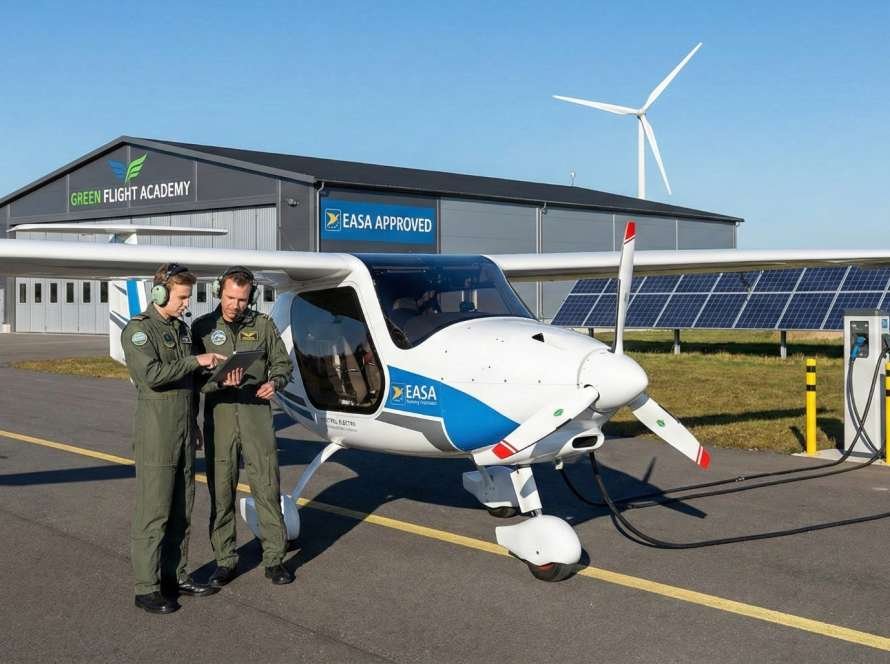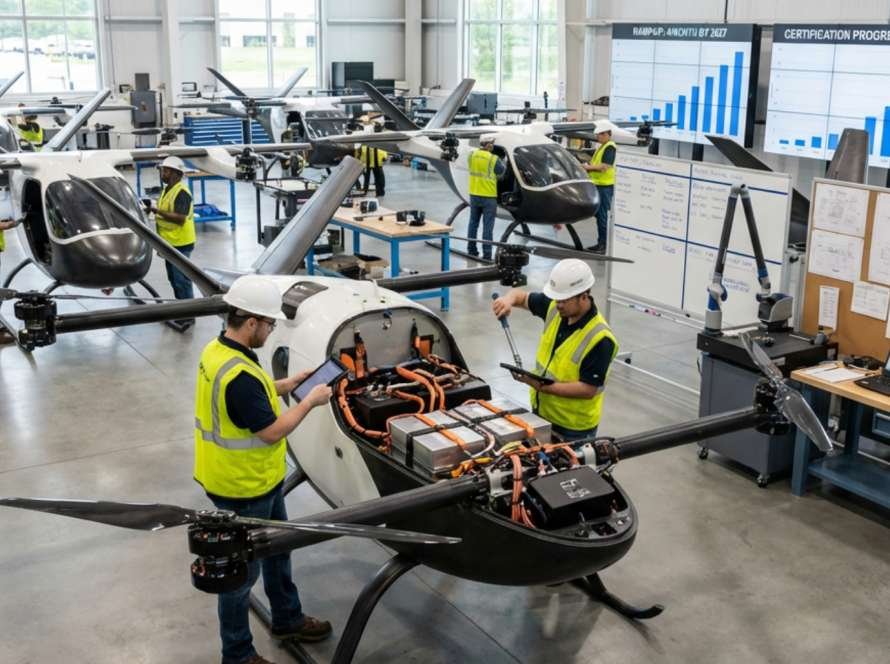
Executive Summary
The electric aircraft charging infrastructure market is rapidly emerging as a foundational layer of next-generation aviation, with global market value projected to reach USD 2.1 billion by 2030, growing at a 20.7% CAGR. As electric and hybrid-electric aircraft move toward early commercial deployment, charging systems are becoming a strategic determinant of scalability, safety, and airport competitiveness.
Infrastructure Moves to the Centre of Electric Aviation Strategy
Electric aviation is no longer defined solely by aircraft design. As fleets transition from pilot programmes to operational use, charging infrastructure is becoming the primary bottleneck – and opportunity – across the aviation value chain.
Growth in the electric aircraft charging infrastructure market is being driven by:
- Commercialisation of electric and hybrid-electric aircraft
- Rapid expansion of urban air mobility (UAM) and eVTOL platforms
- Airport investment in high-power, standardised charging systems
- Regulatory pressure to reduce aviation emissions and meet decarbonisation targets
For executives, charging infrastructure is shifting from a technical consideration to a strategic capital allocation decision.
North America Leads Early Deployment
North America currently accounts for 36% of global market share, supported by early aircraft certification efforts, robust R&D investment, and public–private infrastructure initiatives across the United States and Canada.
Recent developments include:
- Deployment of megawatt-scale fast-charging interfaces
- Modular systems designed for regional electric aircraft and eVTOL operations
- Integration of digital communication protocols enabling real-time monitoring and predictive maintenance
- Federal and state initiatives supporting standardised charging connectors
These advances are accelerating readiness while reducing fragmentation across airport networks.
Japan Advances Standardization and Grid Integration
Japan has positioned itself as a key innovation centre for high-voltage aviation charging systems, with a strong emphasis on reliability, safety, and interoperability.
Key initiatives include:
- Standardised high-voltage charging interfaces to reduce turnaround times
- Smart charging systems with grid integration and load balancing
- Lightweight connector designs meeting aviation safety and electromagnetic compatibility standards
- Government-backed pilot deployments at regional airports
This approach strengthens Japan’s role in both domestic deployment and exportable aviation infrastructure technology.
Technology Priorities: Power, Safety, Interoperability
The scalability of electric aviation depends on charging systems capable of meeting aviation-specific operational demands.
Critical technology drivers include:
- Fast-charging architectures supporting high aircraft utilisation
- Advanced thermal management for high-power delivery
- Digital interfaces enabling system diagnostics and predictive maintenance
- Industry-wide movement toward interoperable charging standards
Together, these capabilities reduce operational risk and improve asset efficiency for airports and fleet operators.
Market Segmentation Signals Near-Term Demand
By Charging Interface Type
- Conductive charging systems lead with approximately 60% market share, reflecting higher efficiency and established safety standards
- Inductive (wireless) charging accounts for around 25%, gaining traction in automated ground operations
- Hybrid and experimental solutions represent the remaining share, focused on next-generation aircraft concepts
By Application
- Commercial aviation leads adoption, supported by regional and short-haul electrification
- Urban air mobility (eVTOL) continues to scale through pilot programmes and smart city initiatives
- General aviation remains an early adopter for training and private electric aircraft
Why This Market Matters to C-Suite Leaders
For aerospace OEMs, airport operators, utilities, infrastructure investors, and policymakers, the electric aircraft charging infrastructure market represents a strategic convergence point between aviation, energy, and digital systems.
Executive-level implications include:
- Charging readiness will define airport competitiveness
- Infrastructure choices will shape fleet scalability
- Power availability and grid integration will become strategic constraints
- Early infrastructure investment can secure long-term ecosystem advantage
Electric aviation will not scale without reliable, high-power charging – making this market a core enabler, not a supporting function.
Competitive Landscape Reflects Ecosystem Formation
The market includes a cross-section of aerospace, energy, and infrastructure leaders such as Rolls-Royce Holdings, ABB, Eaton, Joby Aviation, Embraer, Lilium, Eviation, and ChargePoint. This diversity highlights the cross-industry collaboration required to commercialize electric aviation at scale.
Strategic Outlook
As electric aviation transitions from demonstration to deployment, charging infrastructure will determine the pace of adoption. Regions that align aircraft certification, airport readiness, and energy infrastructure will secure first-mover advantage. The electric aircraft charging infrastructure market is no longer speculative. It is becoming a strategic pillar of future aviation systems.
High-capacity electric aircraft charging infrastructure already operating at scale read more