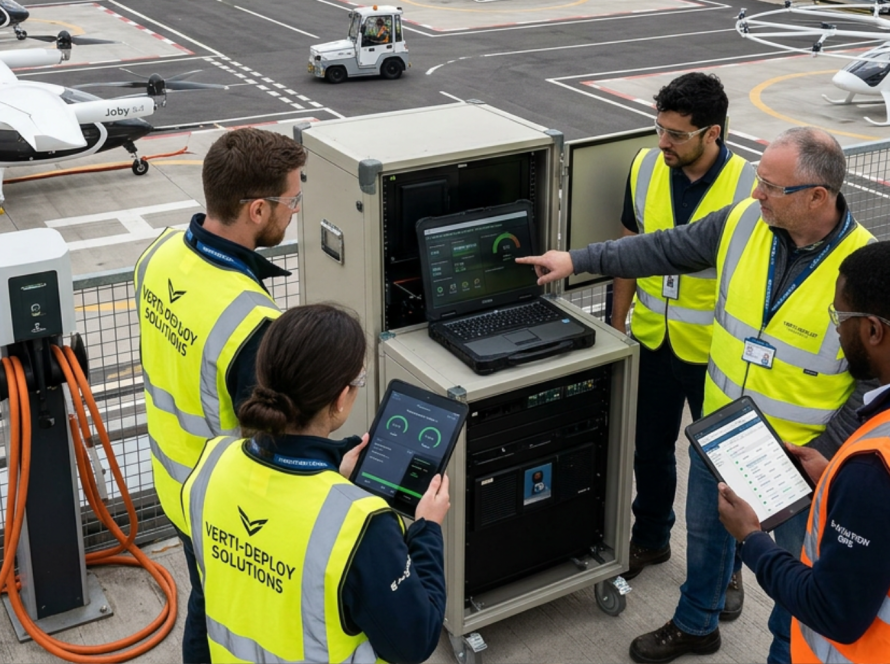
For years, electric aviation was the “silent revolution,” a sector long on promise but tangled in regulatory red tape. This week, the tape finally snapped. In the first week of March 2026, the sector’s major players moved from proving that electric flight is possible to proving it is permissible.
For C-suite leaders and transportation investors, the good news lies in the collapse of regulatory ambiguity. We are no longer looking at prototypes. We are looking at certified, production-ready assets.
Archer’s “100% Acceptance” Milestone
On March 3, 2026, Archer Aviation announced a landmark regulatory breakthrough: it is the first electric air taxi company to achieve 100% final acceptance from the FAA for its “Means of Compliance.”
This isn’t a minor paperwork update. It means the FAA has officially agreed on every specific method Archer will use to prove its Midnight aircraft is safe, covering everything from battery thermal runaway protocols to flight control software. This eliminates the single largest regulatory unknown for the company, clearing a straight path to Final Type Certification and the planned 2026 commercial launch with United Airlines.
Joby’s Stage 4 Surge and Global Footprint
Parallel to Archer, Joby Aviation reported a massive 18-point increase in its FAA Stage 4 (Testing & Analysis) progress this week. Joby has confirmed that all aircraft required for Type Inspection Authorization are now in production. Furthermore, its massive 700,000 square foot facility in Ohio is being prepped to double capacity to four aircraft per month by 2027.
With a $1.2 billion capital cushion following recent raises, Joby has reaffirmed its timeline for the world’s first commercial air taxi service in Dubai later this year. The dream of “Uber for the skies” is officially transitioning from an app mockup to a tarmac reality.
The $4 Billion Order Book: Eviation Alice
While eVTOLs dominate urban news, regional electric flight is seeing a massive capital influx. Eviation announced this week that its order book for the all-electric Alice commuter plane has surpassed $4 billion.
With a new order for 30 aircraft from U.K.-based leasing firm MONTE, the Alice is now the world’s most endorsed flight-proven electric commuter plane. By cutting operating costs per flight hour to a fraction of traditional turboprops, the Alice is enabling regional airlines to activate routes that were previously economically unviable.
Technical Breakthrough: Lithium-Metal Maturity
Underpinning these airframe wins is a fundamental shift in energy density. Reports this week indicate that Lithium-Metal Secondary Batteries are entering a transformative growth phase, with energy densities now reaching the 450 to 500 Wh/kg threshold required for commercially viable regional hops. This technology is projected to see a 65.5% CAGR through 2032, providing the “fuel” for the next generation of 500-mile electric flights.
The Bottom Line
The shift in E-Aviation this week marks the end of the experimental era. With Archer’s regulatory progress and Eviation’s $4 billion in orders, the industry has cleared its primary hurdles: safety validation and market demand. For the C-suite, the 2026 priority has moved beyond monitoring technology toward securing the physical infrastructure and grid capacity required to support the first operational fleets.